


Well-coordinated teamwork speaks About Us
Authenticity
We are committed to offering only genuine moldavite. Every piece is carefully sourced, examined, and represented honestly — never replicated, altered, or misrepresented.
Transparency
We believe trust is built through openness. From sourcing to education, we provide clear and accurate information so our customers can shop with confidence.
About our online store
We are dedicated to sharing authentic moldavite with people who value rarity, history, and natural beauty.
Moldavite is one of the rarest natural stones on Earth, formed nearly 15 million years ago by a meteorite impact in what is now the Czech Republic. Found only in select regions of Bohemia and Moravia, each piece is a genuine fragment of cosmic history — shaped by nature and time, never manufactured.
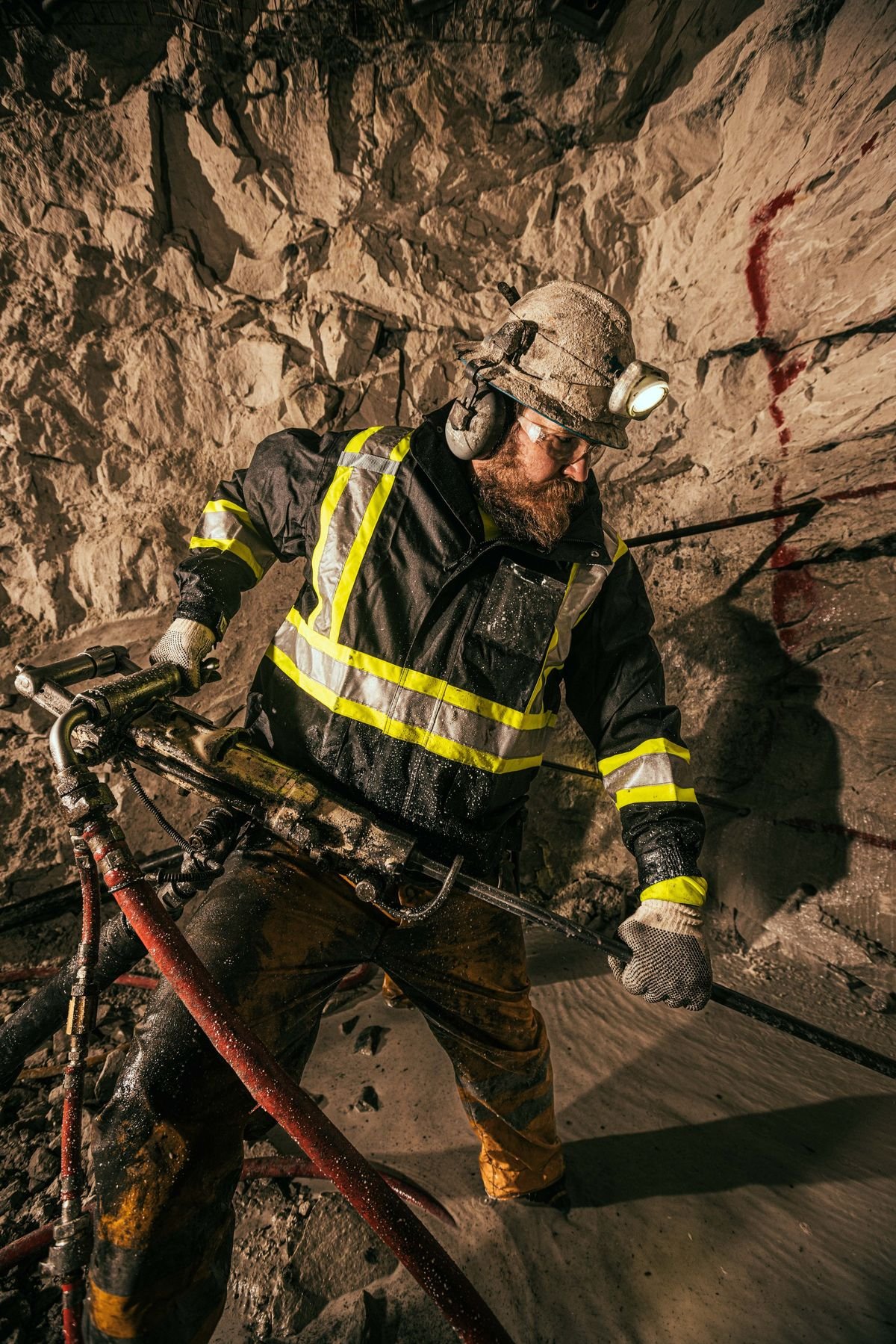
Our moldavite is responsibly sourced through trusted Czech miners and long-established suppliers who specialize in genuine tektites. We carefully select every piece for authenticity, quality, and natural character. No replicas, no artificial glass — only real moldavite.
We believe education is just as important as sourcing. That’s why we are committed to transparency, accurate information, and helping our customers understand how to identify real moldavite and appreciate its geological significance.
Whether you are a collector, jeweler, or simply someone drawn to rare natural stones, our goal is to provide you with moldavite you can trust — responsibly sourced, honestly represented, and handled with care.
Thank you for being part of our journey and for helping preserve one of Earth’s most extraordinary natural treasures.
Moldavite – The Gemstone That Fell To The Earth
The origin of Czech moldavites, also known as the Vltavines, is most likely connected with an event that happened about 14.7 million years ago. At that time a huge meteorite around 1 km in diameter hit the borderland between what is today southern Bavaria and Baden-Württemberg. The impact left traces that are still visible today, namely the 24-km wide Ries crater, in which the city of Nördlingen was built, and the Vltavines. The energy released by the impact of this large body instantly melted the surrounding rocks and glassy masses were ejected to heights of up to 200 km and distances as far as 450 km. Fragments of this semi-liquid mass that had been transformed into aerodynamic shapes on their way through the atmosphere (drops, spheres, rotating discs, doubled drops - dumbbells, etc.) fell down on a Tertiary plateau with large lakes. This territory is today called South Bohemia. South Bohemia is the most famous moldavite site today, but there are also other sites in the Czech Republic where these gemstones can be found. One of them is near Dukovany and Třebíč in South Moravia. Other recently discovered sites include the moldavite fields in the Cheb Basin or sediments in the vicinity of Dresden. Rare occurrence of Vltavines has been documented, although with less reliability, in Upper Austria in the borderland at the south-eastern end of the Třeboň Basin. Rare finds of Vltavines are reported from the Elbe River Basin or the Vltava Terraces near Prague.
The Vltavines belong genetically to natural glasses, or more specifically, to tektites (from the Greek word tektos = molten). The tektites also can be found in other regions worldwide (the Philippines, Thailand, Vietnam, Java, Indochina and Russia). However, as a rule only the Vltavines are green, and save for minor exceptions, they are translucent. These physical properties justifiable rank them among unique items in the world. Their hardness is between 6.4 and 6.7 on the Mohs scale of mineral hardness.
The name Vltavine (sometimes also moldavite) was introduced in 1836 by F. X. M. Zippe, the custodian of mineral collections at the National Museum in Prague, who named the gemstones after Týn nad Vltavou (Moldatutein) as the first official discovery field. A typical feature of these gemstones is their deeply pitted surface, also called sculptation. The relief of the Vltavines depends on the chemical corrosion and permeability of the environment in which the Vltavines had been deposited. The surface of the Vltavines is etched by acids that are formed due to slow chemical processes as a result of the decay of minerals, which the sediment is composed of. The gemstone can be deeply pitted as is typically the case of Vltavines coming from the sites of Besednice, Dobrkovská Lhotka or Nesměň. The surface with fine-scale sculpting can be found very often on the Vltavines from the sites of Chlum nad Malší, Krasejovka, Slavče, Chrášťany, and many others. The pitted surface is characteristic for the Vltavines from the surroundings of Vrábče, Koroseky or Něchov. Nevertheless, we can say that except for the specific type of sculptation that is typical (save for rare exceptions) solely for the Besednice site, all the above-mentioned types of sculptation can be found on each of the sites. Similarly, the lustre of the Vltavines varies strongly from high-glossy through varnish-like to the fully matte appearance that is typical for the Vltavines from the sites of Jankov or Brusná. The green colour that distinguishes the Vltavines from the other tektites carries a full range of shades, from poison emerald to grass green or brownish green (Jakule site). There are also extremely rare dark brown Muong - Nong moldavites. True rarities are light green Vltavines known from the surroundings of Radomilice and Vodňany. The Vltavines discovered on farmland topsoil are often damaged by agricultural machinery and their surface is usually worn due to their permanent motion in the topsoil.
Vltavines are mainly found in clayey, clayey-sandy or gravelly and sandy sediments of the Tertiary period. The features of the sediments in which they are deposited depend mainly on the geological environment in which they have been transported and deposited. Although ten scientific conferences were held in the past to deal with the issues of the Vltavines and their origin, the process by which various types of Vltavines were deposited in the sediments has never been fully proven and documented. The types of Vltavine deposits in the sediments can be roughly divided as follows:
We work through every aspect at the planning
Our Mission
Our mission is to preserve the integrity of moldavite by offering only genuine, responsibly sourced stones while educating our community with honesty and respect for science, history, and nature. We strive to build trust through transparency, support ethical sourcing practices, and ensure that each piece of moldavite is represented accurately and handled with care.
Whether you are a collector, jeweler, or simply someone drawn to rare natural stones, our goal is to provide you with moldavite you can trust — responsibly sourced, honestly represented, and handled with care.